What Exactly Is a Dental Abscess?
A dental abscess is a collection of pus that forms inside a tooth, in the gum, or in the bone that holds teeth in place. It is caused by a bacterial infection and represents the body's attempt to wall off and contain that infection.
There are two main types. A periapical abscess forms at the tip of the tooth root, usually as a result of untreated decay or a dead nerve. A periodontal abscess forms in the gum alongside the tooth root, usually as a result of gum disease or trapped food.
Both types need professional treatment. The infection will not clear up with home remedies, and antibiotics alone will not eliminate the source. The tooth or gum needs to be treated to remove the origin of the infection.
Warning Sign 1: Persistent, Intense Pain
Abscess pain is different from ordinary tooth sensitivity. It tends to be deep, throbbing, and constant. It often radiates to the jaw, ear, or temple on the same side. Many patients describe it as the worst dental pain they have ever experienced.
The pain may intensify when you lie down, because blood flow to the head increases in a horizontal position. This is why abscess pain often disrupts sleep and drives people to seek care at odd hours.
If you have throbbing dental pain that ibuprofen barely touches, an abscess is a strong possibility.
Warning Sign 2: Swelling in the Face, Gum, or Neck
Swelling is the most visible sign that infection has spread beyond the tooth. It can appear as a localized bump on the gum near the affected tooth, or it can cause visible facial swelling in the cheek or jaw.
In more advanced cases, swelling can extend to the floor of the mouth, under the tongue, or down the neck. This is a medical emergency called Ludwig's angina, and it can block the airway. If you notice swelling spreading downward from your jaw toward your neck, go to the emergency room immediately.
Mild gum swelling with a pimple-like bump is still an abscess and still needs treatment, but the urgency is slightly lower. Call (240) 387-8233 and we will see you the same day.
Warning Sign 3: A Bad Taste in Your Mouth or Foul Smell
When an abscess drains on its own, pus leaks into the mouth. This produces a distinctly bad taste, often described as salty, metallic, or foul. You may also notice bad breath that does not improve with brushing.
Ironically, when an abscess starts draining, the pain often decreases because the pressure is relieved. This can trick people into thinking the problem is resolving. It is not. The source of infection is still there, and the abscess will refill and drain repeatedly until the tooth is properly treated.
Warning Sign 4: Fever and General Malaise
A fever accompanying dental pain means the infection is triggering a systemic immune response. Your body is fighting the bacteria, and it is struggling. Other systemic signs include fatigue, feeling generally unwell, loss of appetite, and swollen lymph nodes under the jaw or in the neck.
A fever above 101 degrees Fahrenheit with dental swelling is a red flag. This combination suggests the infection is advancing and could become dangerous. Do not wait to see if it breaks on its own. Call (240) 387-8233 or go to the nearest emergency room.
Warning Sign 5: Sensitivity to Pressure, Heat, or Touch
An abscessed tooth is often extremely sensitive to pressure. Chewing on it is painful, and even light tapping can be excruciating. The tooth may also feel "tall" in your bite, as if it has shifted upward slightly. This happens because the pocket of pus at the root tip pushes the tooth outward.
Sensitivity to heat is another common sign. While cold sensitivity can have many causes, heat sensitivity in combination with other abscess symptoms strongly suggests a nerve that is dying or dead.
How We Treat Dental Abscesses at Emergency Dentist of Rockville
Treatment depends on the severity and location of the abscess.
For a periapical abscess (at the root tip), we typically perform a root canal to remove the infected nerve tissue and clean the canals. If the tooth is too damaged to save, we extract it and drain the infection.
For a periodontal abscess (in the gum), we drain the pus, clean the area thoroughly, and treat the underlying gum condition.
In some cases, we prescribe antibiotics to help your body fight the infection, especially if there is facial swelling or systemic symptoms. But antibiotics are a supplement to dental treatment, not a substitute for it. The source of the infection must be addressed.
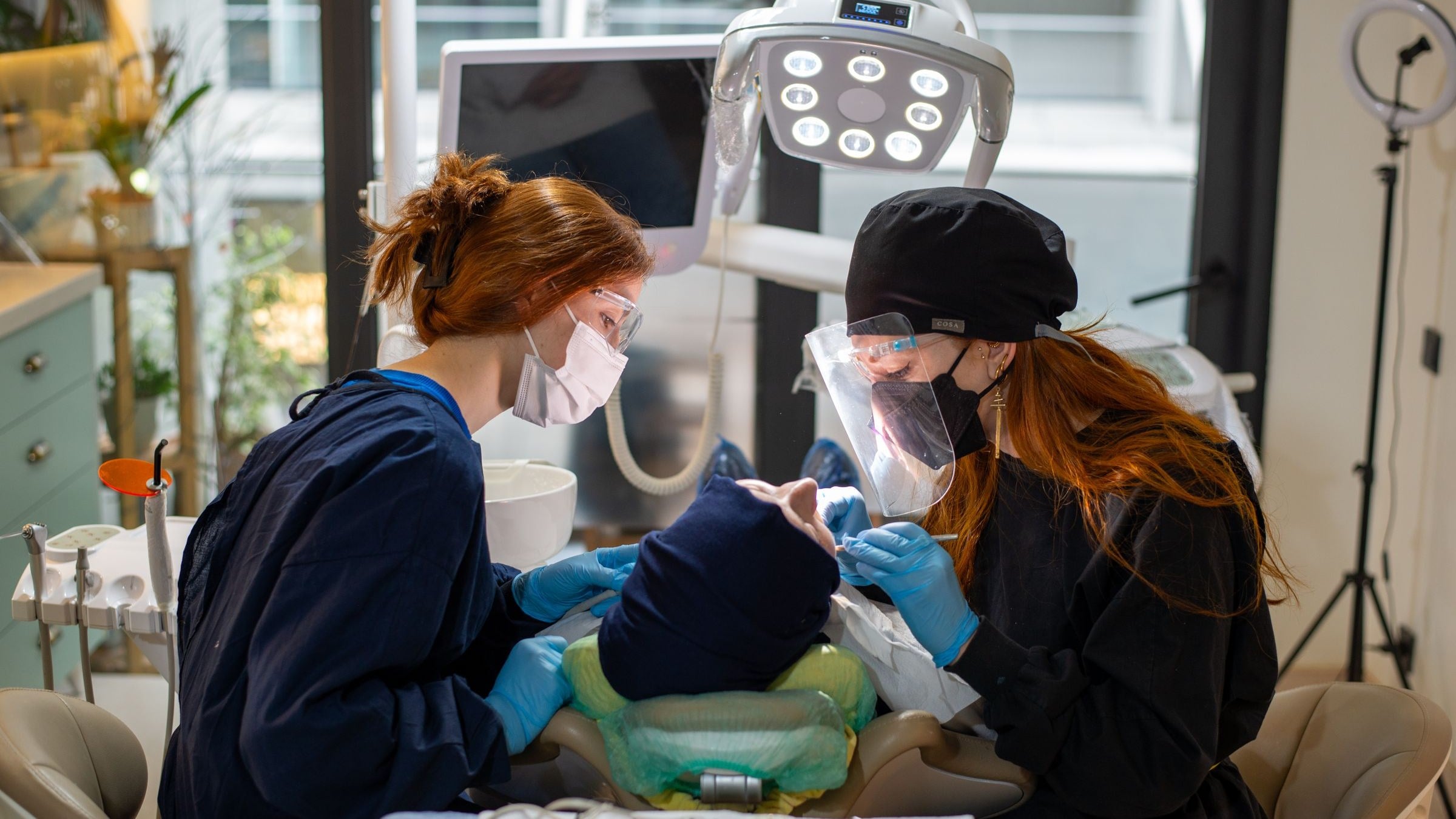
We see abscess patients the same day. Call (240) 387-8233.
Why You Should Never Try to Treat an Abscess at Home
There is no shortage of home remedies for dental abscesses online: garlic, clove oil, baking soda, hydrogen peroxide, tea bags. Some of these may offer temporary pain relief, but none of them can eliminate the infection.
Attempting to pop or drain an abscess yourself is dangerous. Without sterile instruments and proper technique, you risk pushing bacteria deeper into the tissue, causing the infection to spread, or creating an open wound that becomes re-infected.
Dental abscesses require professional drainage, source treatment (root canal or extraction), and sometimes antibiotics. There is no shortcut. If you suspect an abscess, call Emergency Dentist of Rockville at (240) 387-8233.